Industry
Instrumentation for energy from waste
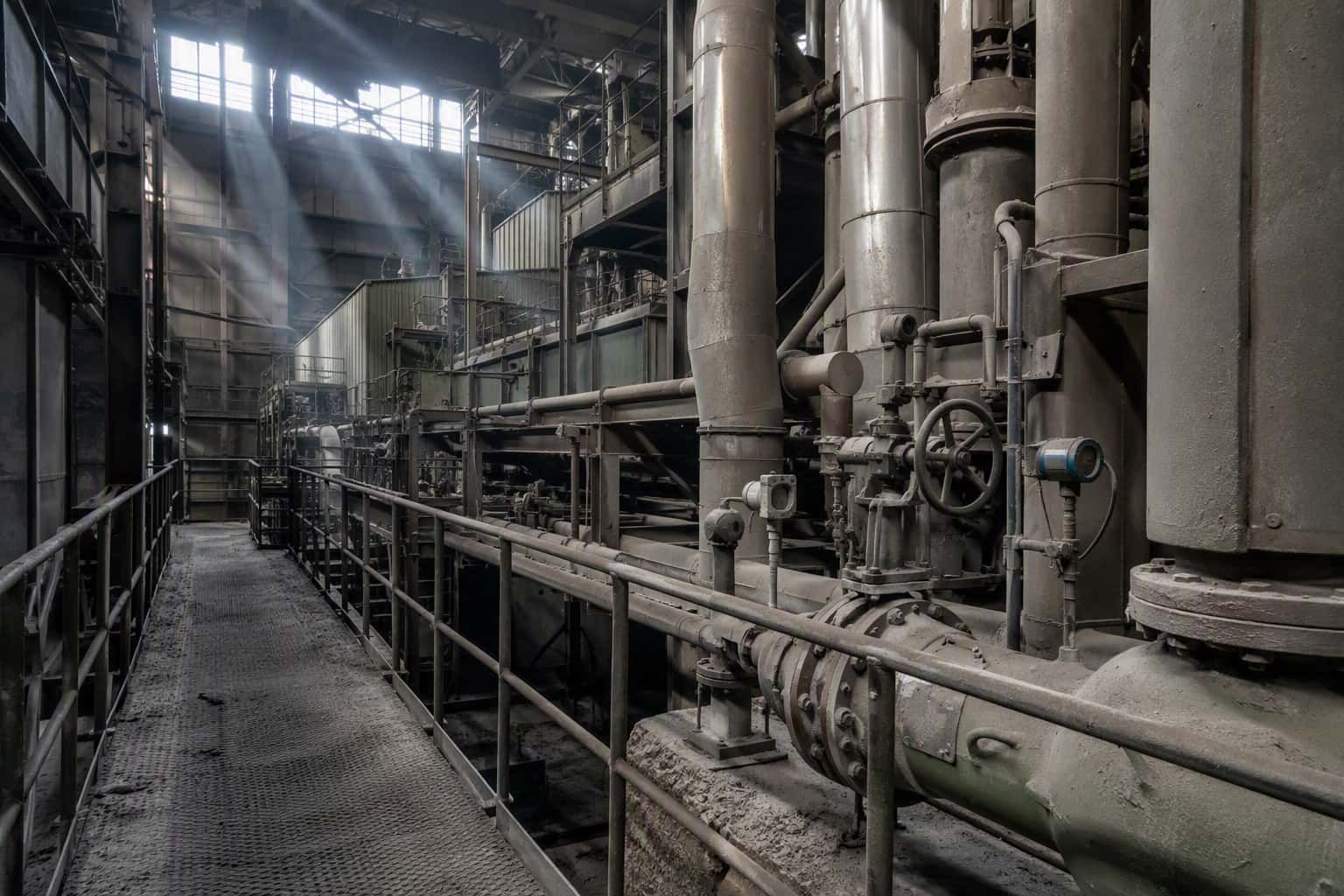
Energy-from-waste plants are among the harshest environments instrumentation has to survive: abrasive flue gas, high temperatures, corrosive condensate and continuous operation. The instruments that work here are specified for those conditions from the start, not adapted from a general-purpose catalogue.
Sector pressures
Why does measurement fail in energy from waste?
Ash blinds the level probe
Ash builds up around the mounting and the aperture, so the instrument reports a silo as full when it is nowhere near it.
Acid condensate thins metal
Below the acid dew point, flue gas condenses into sulphuric and hydrochloric acid that thins the wall until it ruptures.
Furnace temperature is law
Retained law fixes 850°C for two seconds after the last air injection, making furnace temperature a permit condition.
Our approach
How we specify for energy from waste
Flow, level, temperature and pressure measurement rated for the conditions, isolation and control valves that hold up to the media, and the installation, commissioning and calibration support that keeps them accurate. We specify across manufacturers, matching each measurement point to its duty. That measurement is also what keeps combustion efficient and emissions inside the permit.
Applications
Related applications in energy from waste
Partners








FAQ
Common questions
What instrumentation does an energy-from-waste plant need?
Flow, level, temperature and pressure measurement rated for abrasive, high-temperature flue-gas conditions, plus isolation and control valves matched to aggressive media, all kept accurate through scheduled calibration.
What temperature does an energy-from-waste furnace have to reach?
Retained law sets at least 850°C for two seconds after the last injection of combustion air, and 1,100°C where hazardous waste contains more than one percent halogenated organic substances. The temperature is measured near the inner wall of the combustion chamber.
Why do instruments fail faster in energy-from-waste?
Fly ash, acidic condensate and thermal cycling attack general-purpose instruments. Correct material selection and duty-rating at specification stage is what extends service life.
Do you supply across multiple manufacturers for EfW?
Yes. We specify the right instrument for each duty across manufacturers.